
Language technology · Research in development
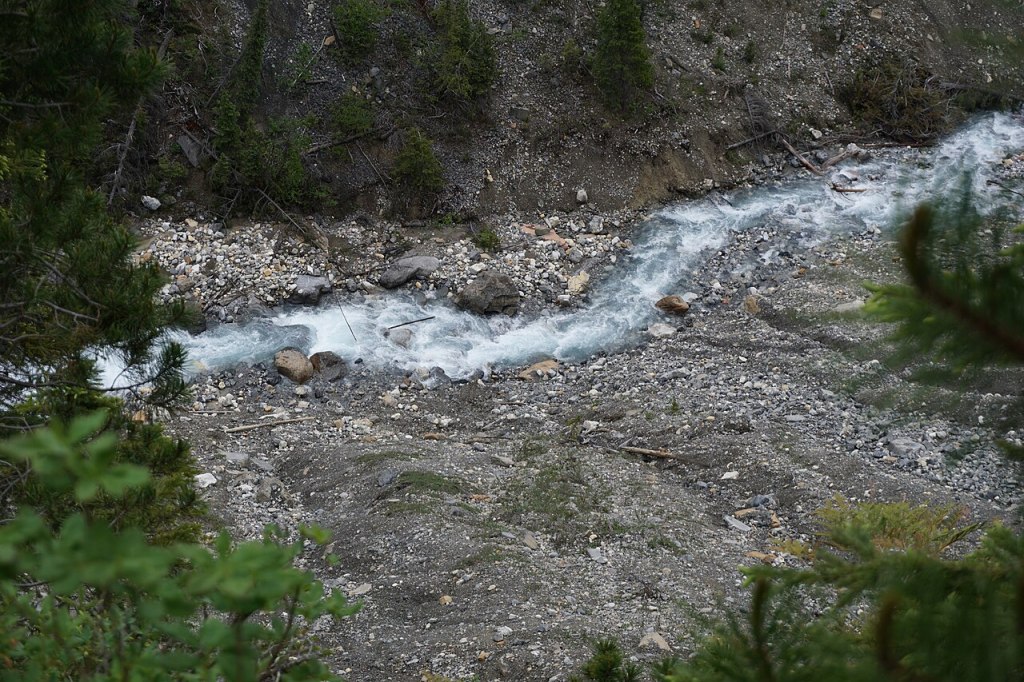
A teacher may know exactly which creek the class will visit on Friday without knowing the title of a single recording about it. I’d like the database I’m developing at Talking Owl to let that teacher start with the creek. If the language team has brought two recordings into relationship with that place, a teacher should be able to discover the materials the community has approved for the class and begin to hear the possibilities for a lesson.
In my MA work on an interactive nsyilxcən edition, the relationship I concentrated on was between a recorded voice and the written words a learner could follow as they listened. The database grows out of a question that one edition left open for me: how could a community draw on its collection to make many such resources, on its own terms, without each new teacher having to reconstruct what speakers, families and language staff had already worked out?
Imagine a speaker listening back to an older recording and recognizing a bend in the creek from the description. With the speaker’s agreement and under local protocols, the language team could mark that passage, document how the place was identified, and link the words to a reviewed transcript. A second recording might be a conversation in which someone uses the name of the same place in passing. Heard together, the two offer a lesson neither could give on its own: students could listen to the description before the walk and hear how the place comes up in everyday speech.
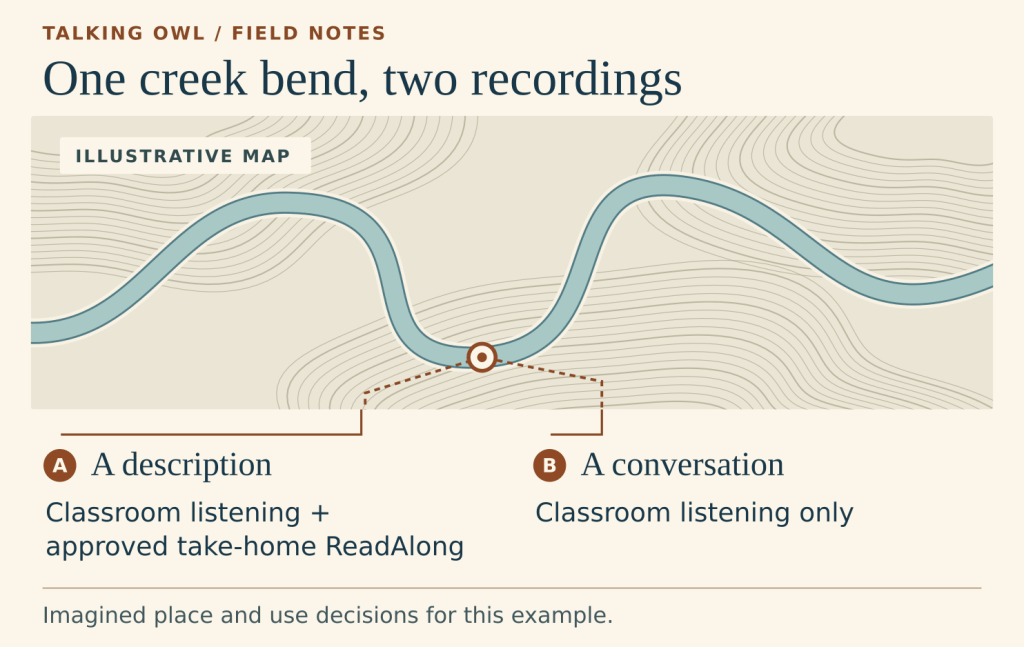
Suppose both recordings are approved for classroom listening, but only the description may go home with learners. The teacher could play the conversation in class and use the description to make a take-home ReadAlong, provided that use is covered too. A family-only recording would stay out of the teacher’s search altogether. This is where governance belongs in the design: in the search that helps someone find a passage, in the player that lets them hear it, and in the choice of what goes into a new lesson. The people with authority over a recording decide which of those paths are open.
An early demonstration uses invented records to explore how to document those relationships and decisions together. The next step is to integrate that design with the ReadAlong application on a local hard drive, so a team can work without uploading its collection. A useful test will be to build the creek lesson with sample recordings and open the take-home copy on another computer. Does it contain the approved description and its credit? Has the classroom-only conversation stayed behind, along with any notes students aren’t meant to see?
What I hope this makes possible is a collection that language teachers can keep building from. The next teacher who walks that creek with a class could draw on the ear of the speaker who recognized the bend, the work of the person who checked the transcript, and the guidance of the people who chose what to share.


Leave a Reply