
A language collection becomes more useful when the people responsible for it can preserve, understand and care for it over time. I work with Indigenous communities, language programs and cultural organizations to develop the skills, workflows and tools that support that responsibility.
I also help individuals and organizations with podcasting, narration and audiobooks, including recording in my own studio, voice work and audio production.
On this page: Digitization · ReadAlongs · Training · AI literacy · Ecoacoustics · Consulting · Post sound · Podcasts & voice
Digitization & preservation
Collection care
From analog materials to a usable archive.
Transfer support for open-reel audio, cassettes and VHS begins with an assessment of the formats, condition, priorities and permissions associated with the collection.
Digitization: $35–$65 per hour of work, depending on the collection and scope. The hourly rate and estimated working time are agreed before work begins; the digitization rate never exceeds $65/hour.
A project can include collection inventories, playback and transfer planning, preservation masters, listening or viewing copies, file naming, technical metadata and quality-control records.
Transfer covers assessment, playback setup, capture, quality checks and file preparation. Basic cleanup for an access copy covers level adjustment and trimming blank lead-ins and tails, where agreed. Noise reduction, click repair and other restoration are quoted separately. The unprocessed transfer is retained as the preservation master; processing is documented in a derivative copy.
The quality of a transfer depends on the full signal path, gain staging and careful listening. Explore the technical workflow, restoration tools and film and ADR experience behind this work.
Practical outcomes
A workflow your team can use
An organized collection, clear documentation and a handover that supports continuing work. Storage, backup, access restrictions and long-term care are planned with the community.
Digitization: common questions
Practical answers about formats, pricing, file delivery and community control.
What recordings can Talking Owl digitize?
Talking Owl Technologies, based in the Okanagan, British Columbia, digitizes and transfers a wide range of analog and digital media, including open-reel audio, cassettes, 8-track cartridges, VHS, Hi8, MiniDVDs, MiniDiscs and floppy disks. Each collection is assessed for format, condition, priorities and permissions before a transfer plan is agreed. See the En’owkin Centre case study →
How much does digitization cost?
Digitization is $35–$65 per hour of work, depending on the collection and scope, with the rate and estimated hours agreed in advance. Working time includes preparation, playback and transfer, quality checks and file preparation. See digitization pricing →
What files will I receive, and how are they delivered?
Audio deliverables include an unprocessed WAV preservation master and an MP3 access copy, with file naming and documentation agreed for the collection. Video formats and delivery by encrypted SSD or an approved secure transfer are agreed before work begins.
Is audio restoration included?
Basic level adjustment and trimming of blank lead-ins and tails can be included for access copies, where agreed. Noise reduction, click repair and other restoration are assessed and quoted separately; the unprocessed preservation master is retained.
Can recordings stay private and under community control?
Yes. Digitization does not make recordings public. Storage, access and reuse are agreed under the relevant community authority and protocols, and access to recordings is never treated as permission for AI training. Read about community control →
Can you help our team digitize its own collection?
Yes. Consulting for workstation setup, equipment selection, documented workflows and practical staff training is $125/hour, with the scope and estimated hours agreed in advance. Explore consulting & capacity building →
Language supports
ReadAlongs & resource creation
Now that your collection is digitized, what’s next?
Beyond digitization, my focus for now is AI literacy for communities, helping people understand the tools, their limits and their implications for language, knowledge and data. I offer practical training shaped around your team’s questions, skills and priorities.
Community authority comes first. The history of extractive research involving First Nations makes accountability essential. As a settler researcher and consultant, I defer to community authority and support speech-technology development only when a community has made an informed decision to proceed through its own governance and consent processes. Community protocols, the First Nations principles of OCAP® for First Nations work, and the CARE Principles for Indigenous Data Governance guide my practice. I respect decisions to decline or pause development and never treat access to recordings as permission for AI training.
For an Indigenous-led introduction, see Pathways to AI: An Introduction for Indigenous People and Organizations, the First Nations Technology Council’s free, self-paced course developed in partnership with Mila – Quebec AI Institute.
ReadAlongs, G2P & my MA research
ReadAlong Studio, developed by the National Research Council of Canada (NRC) with Carleton University and Indigenous collaborators, aligns existing voice recordings with written transcriptions so learners can follow highlighted words and select a word to hear it again.
My MA research developed Kʷu Sqilxʷ, an interactive digital edition bringing nsyilxcən recordings and text together through ReadAlongs. This included contributing a nsyilxcən grapheme-to-phoneme (G2P) mapping, with linguistic guidance from Dr. John Lyon and technical support from NRC’s Eric Joanis.
G2P mappings describe how a language’s written symbols correspond to its sounds, helping the software align text with recorded speech. I have also collaborated with linguist Anthony (Tony) Mattina and Eric Joanis on ReadAlongs for Salish-language materials and support for Salish phonetic notation in the G2P tools.
Try the Horn Lake ReadAlong → Listen to Edna Jack’s telling, credited as transcribed with Clara Jack in 1988, and follow or select the highlighted words.
When a community chooses to proceed, Talking Owl can offer consultation, resource preparation and training. Further options, where feasible and authorized, include automatic speech recognition (ASR) for transcription and text-to-speech (TTS) for synthesized speech. The SENĆOŦEN LOBOT team’s work, involving the W̱SÁNEĆ School Board, NRC and other partners, offers one example of this development in practice.
Prepare & align
Support with audio preparation, Unicode text, orthography, text–speech alignment and checking the result with people who know the language.
Create & maintain
Training in a repeatable production workflow, organizing the source files and making resources available through a community-approved classroom, local or web setting.
See the MA project & ReadAlong research →
Sources & further reading
Research history. First Nations Information Governance Centre. (2014). Ownership, Control, Access and Possession (OCAP™): The Path to First Nations Information Governance, pp. 6–9.
Community authority. First Nations Information Governance Centre, The First Nations Principles of OCAP®; Global Indigenous Data Alliance, The CARE Principles for Indigenous Data Governance.
AI literacy. First Nations Technology Council, Pathways to AI: An Introduction for Indigenous People and Organizations. The provider credits Mila – Quebec AI Institute as its development partner, with support from Microsoft Elevate.
ReadAlong technology. National Research Council Canada, ReadAlong Studio: Application for Indigenous audiobooks and videos project. This source credits NRC, Carleton University and Indigenous collaborators.
My ReadAlong work. Carpenter, C. (2024). Seeding alignment between language technology and Indigenous methodologies: The making of Kʷu Sqilxʷ an interactive digital edition [Master’s thesis, University of British Columbia]. DOI: 10.14288/1.0442345.
G2P software and contribution. Pine, A., et al. (2022). Gᵢ2Pᵢ Rule-based, index-preserving grapheme-to-phoneme transformations. Proceedings of the Fifth Workshop on the Use of Computational Methods in the Study of Endangered Languages, 52–60. The NRC Indigenous Languages Technology G2P repository includes the nsyilxcən mapping credited to Craig Carpenter and the Salishan APA-to-IPA mapping credited to Tony Mattina and Eric Joanis.
Speech technologies. Geng, M., Littell, P., Pine, A., PENÁĆ, Tessier, M., & Kuhn, R. (2025). Supporting SENCOTEN Language Documentation Efforts with Automatic Speech Recognition [Preprint]. arXiv:2507.10827. For speech synthesis, see National Research Council Canada, Speech generation for Indigenous language education, which describes TTS development with community education partners and the need for additional listening materials where fluent speakers are few.
SENĆOŦEN example. SENĆOŦEN LOBOT Team, “Speech Generation for Indigenous Language Education”, statement on the ICPhS 2027 invited-speakers page; W̱SÁNEĆ School Board, SȾÁ,SEN TŦE SENĆOŦEN Department, which identifies its oversight of SENĆOŦEN.org.
Example credits. Horn Lake, MELTR.org ReadAlongs. The source credits Edna Jack’s telling and “Transcribed with Clara Jack, 1988.”
Web sources checked 20 October 2026.
Training & mentorship
Skills that stay
in the community.
Training is shaped around the team, its equipment and the work it wants to continue. Sessions combine practical demonstrations, guided work on approved materials, documentation and time for questions.
Recording
Voice & language recording
Microphone choice and placement, recording levels, monitoring, session preparation, file management and recording with care for speakers’ time and wishes.
Archives
Digitization & digital stewardship
Training in collection assessment, transfer workflows, metadata, backups, fixity checks and permissions-aware access, with support for setting up your own local digitization workstation.
Language tools
ReadAlong production
Preparing recordings and transcriptions, reviewing alignment, correcting errors and building a repeatable process for new teaching materials.
AI literacy
Choose tools
with understanding.
AI literacy workshops can help language teams and organizations evaluate what a tool does, where data goes, what rights may be affected and whether the output can be trusted.
- Understand the differences between alignment, transcription, synthetic speech and generative AI.
- Evaluate data flows, hosting options, retention and training-related terms before choosing a service.
- Check outputs against the language and the task; identify errors, uncertainty and cultural limitations.
- Develop practical community review and permission processes for proposed uses.
Technical learning supports decisions made under the community’s own governance. Training does not confer OCAP® certification or replace the Nation’s authority.
A free online starting point: Pathways to AI
Pathways to AI: An Introduction for Indigenous People and Organizations is offered by the First Nations Technology Council, developed in partnership with Mila – Quebec AI Institute, with support from Microsoft Elevate. This free, self-paced online course takes approximately 90 minutes and requires no previous AI experience.
The course introduces everyday uses of generative AI, including drafting, summarizing, brainstorming and analysis. It also explores bias, inaccurate outputs, sensitive knowledge and data misuse through Indigenous perspectives on relationality, sovereignty and accountability. It is non-credit professional development; the Technology Council provides a certificate and course badge on completion.
Talking Owl: a half-day, in-person AI workshop
Talking Owl offers a hands-on introduction for community teams and Indigenous-serving organizations who want time to try tools, ask questions and think through their own responsibilities. We begin with your goals and work through practical exercises together, with careful attention to what should remain outside an AI system.
A sample half-day session includes:
- Understand the tools. Explore how generative AI produces responses and distinguish it from speech transcription, text–audio alignment and synthetic voice tools.
- Try a useful task. Draft a fictional event announcement, summarize a public document or brainstorm a project outline. Practise giving clear instructions and improving a response without adding private information.
- Check before trusting. Compare a generated summary with its source. Look for invented claims, missing context and bias, then decide what needs correction or human review.
- Map the data and permissions. Use a fictional scenario to ask where information goes, what a provider retains and who can authorize a proposed use. Discuss community protocols and the First Nations principles of OCAP® where applicable.
- Plan a careful next step. Identify one appropriate task to test, information that must not be entered, who reviews the output and when the team should stop or seek further guidance.
Exercises use public, non-sensitive or fictional materials. Participants are not asked to upload community archives, personal information, sacred knowledge or restricted recordings to public AI services. Examples and pacing can be shaped around the host team’s priorities, with time for discussion and a break.
This is an independent Talking Owl workshop. The online course is recommended as a separate learning resource; the workshop is not affiliated with or endorsed by the First Nations Technology Council, Mila or Microsoft and does not award their certificate.
Environmental listening
Ecoacoustics & Guardian training
Field-recording support includes hydrophones, portable recorders, environmental microphones, listening methods and basic acoustic analysis. This can support community monitoring, land-based education, soundwalks and archives that connect language with place.
My marine recording and analysis work with Tsartlip First Nation and Trailmark in Saanich Inlet supports Guardian training and stewardship.
Beneath Our Waters
Consulting & Project Development
A practical plan for the work you want to do.
I help communities and organizations build the capacity to carry out their own work: setting up digitization and recording workstations, selecting equipment, developing clear workflows and training the people who will use them. Consulting can also support language-resource planning, field-recording approaches and project development.
Consulting can include:
- Digitization and archive planning: assessing collections, identifying priorities, estimating costs and designing workflows for preservation and access.
- Recording and digitization spaces: selecting equipment, planning the signal path and developing procedures that staff can use and maintain.
- Language resources and technology: planning ReadAlong production, evaluating speech tools and considering where AI may be useful, with attention to permissions and data stewardship.
- Environmental recording and listening: designing field-recording approaches, selecting microphones and hydrophones, and planning practical training.
- Project development: defining the scope, technical budget, schedule and training needs for a proposed project or funding application.
Consulting & capacity building
$125/hour
Consulting for workstations, workflows, team training and project planning is $125/hour, with scope, estimated hours and deliverables agreed before work begins.
Collection digitization is $35–$65 per hour of work, depending on the collection and scope.
An introductory conversation is free. Podcast production, narration, audiobooks and other audio services are quoted separately.
Each engagement is shaped around an agreed outcome, whether that is a collection assessment, equipment plan, documented workflow or staff workshop. Community authority and local priorities guide the work.
For funding applications, I can help define collection priorities, equipment needs, training goals, preservation and access plans, work schedules and technical budgets. The community leads the application and the decisions about its materials. Find relevant grants →
Post sound services
Sound design, dialogue editing, voice and ADR recording, restoration and mixing for film, television, animation and digital media. Explore work samples and role-specific credits from my film, television and recording work.
Podcasting, narration & voice
Studio recording and a voice for your story.
I help people plan, record, edit and launch podcasts, and offer narration and voiceover services for podcasts, audiobooks and other spoken-word projects. You can record in my own studio with my support throughout the session, or work with me on a remote recording.
Listen: documentary narration
A 45-second example of my narration and production from Robert Hogg & The Widening Circle of Return for the SpokenWeb Podcast.
Listen: podcast introduction
Hear my introduction to Ramesh Devu’s Story, the most recently published episode of Story is Story. Select the episode in the Spotify player below to hear my opening and presentation style. The player gives access to the full podcast.
Make a podcast of your own.
- Plan the series: clarify the audience, format, episode structure and interview approach.
- Record in my studio: bring your podcast to my own recording space for microphone setup, recording and engineering support. I can also help you plan remote interviews and develop your own recording setup.
- Shape the sound: dialogue editing, noise reduction, sound design and mixing that keep voices natural and easy to follow.
- Narration & voice services: I can voice podcast introductions, scripted episodes, documentary narration and other spoken-word material.
- Prepare to publish: finished audio, episode descriptions and practical guidance on hosting, feeds and distribution.
- Build your own skills: develop a repeatable recording and editing workflow, with hands-on guidance.
Whether you are sharing interviews, community stories, research or creative work, we can shape the production around your audience, your voice and the time you have available.
Audiobook narration for Audible
I voice and record full-length novels and other audiobooks in my studio, including projects intended for Audible through ACX. Narration, recording, editing and mastering are agreed to suit the manuscript and delivery requirements.
Podcast, narration and audiobook projects are quoted individually, with the voice, scope, schedule and delivery requirements agreed before work begins.
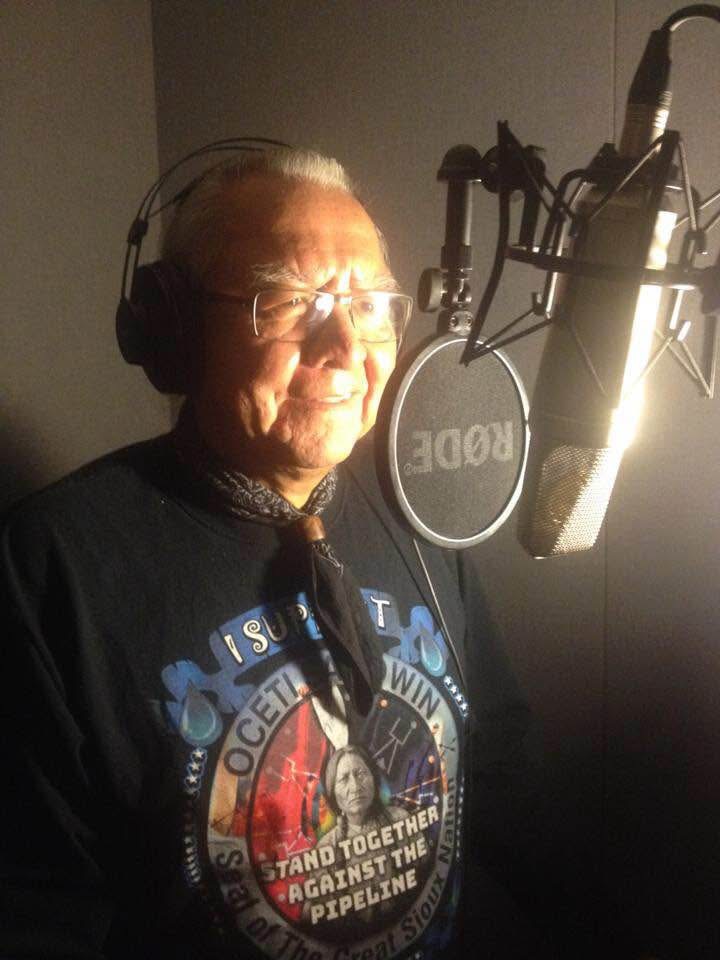
I had the honour of recording Elder Gerry Oleman in 2017 for a cultural safety course at UBC Studios.
Story is Story
My independent oral-history podcast, Story is Story, is designed for serious students of Vipassana meditation in the tradition of S. N. Goenka. Through long-form conversations, experienced meditators share stories about sustained practice and its place in everyday life.
Vipassana is a non-sectarian technique of meditation based on self-observation, practised to develop greater presence, balance and happiness in daily life. Learn more at dhamma.org.
I have practised Vipassana seriously since 2013 and sit long courses each year when I can. The patience and attention cultivated through practice inform how I listen, interview and work with sound.
An independent project by practitioners, sharing personal experiences.
SpokenWeb Podcast · Literary documentary
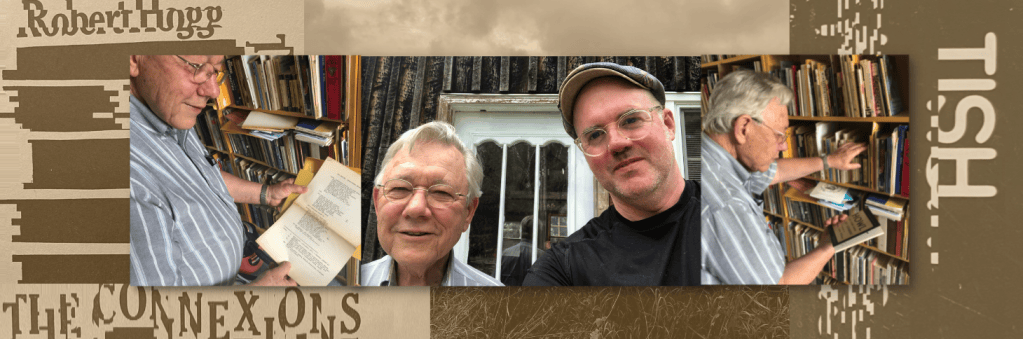
Robert Hogg & The Widening Circle of Return
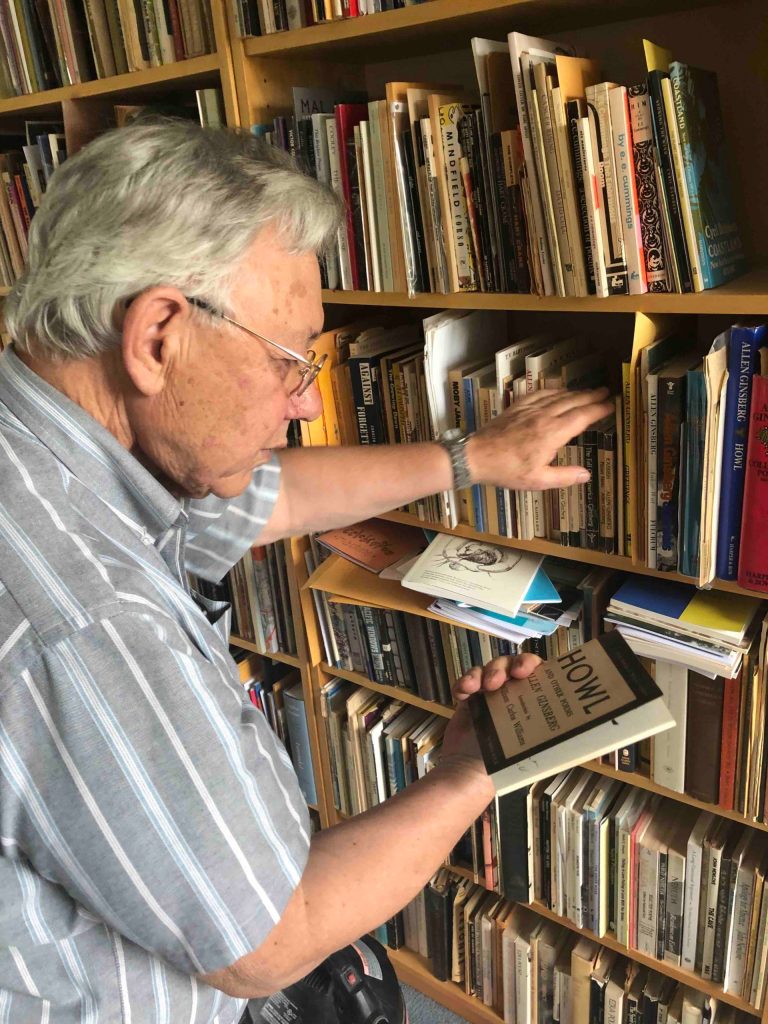
An episode I produced with the SpokenWeb consortium while working as a researcher at UBC Okanagan’s AMP Lab with Dr. Karis Shearer. Interviews with Hogg, my former professor, and archival recordings explore poetry, mentorship and the TISH community.
My work in the lab included helping digitize reel-to-reel and cassette recordings of poetry from the 1950s, 1960s and 1970s, including recordings made by Robert Hogg, Daphne Marlatt and George Bowering, bringing these collections into digital forms for listening, research and creative work.
Let’s talk about your project.
Bring your goals for a podcast, audiobook, recording, language resource, archive or training project. We can identify a practical first step and agree on a scope that fits.

