
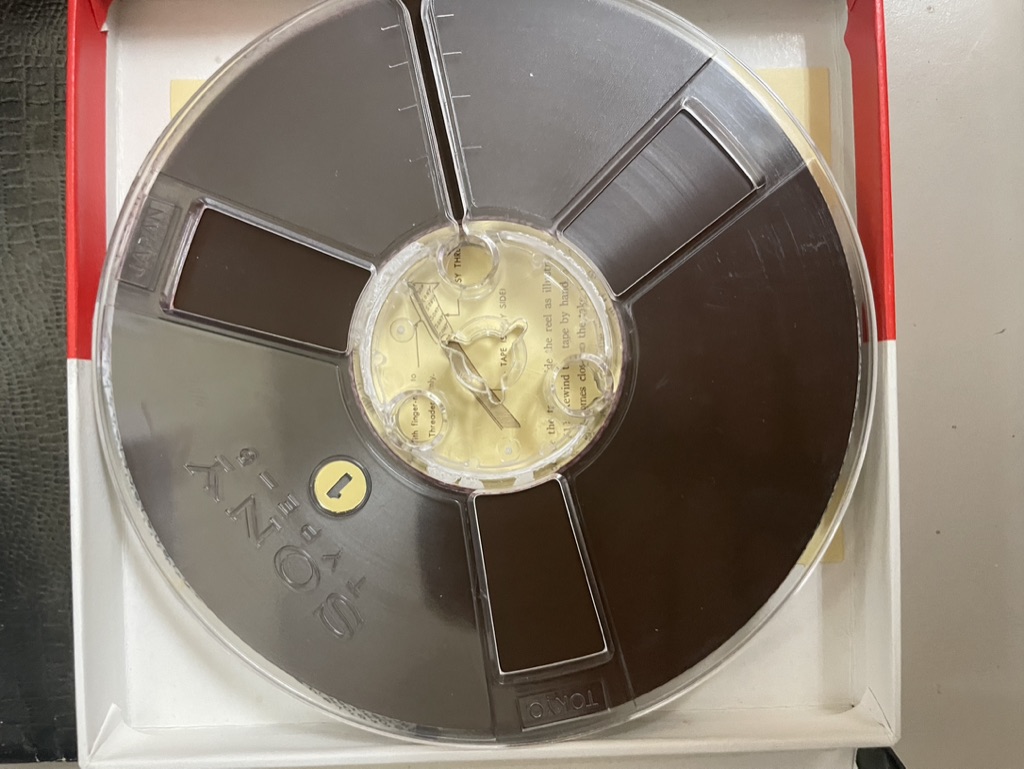
A language collection can hold recordings made at different times, for different purposes and under different responsibilities. Before the first tape is played, a useful question is what the community wants the collection to make possible: preservation, language teaching, family listening, or access for particular groups of people. Those purposes shape the work, from transfer priorities to the form of the eventual handover.
My role in this planning is to help connect the community’s decisions with a workable technical process. A clear beginning gives the people responsible for the collection something they can discuss, revise and carry forward, while making space for questions that cannot be settled by choosing equipment.
Begin with an inventory
I recommend a working inventory with a stable identifier for each item, its format, the information on its label, any known context and an initial condition note. Record uncertainty clearly, including dates or speakers that still need confirmation, and respect restrictions on the descriptions themselves. Even a small inventory can help a team identify priorities and estimate the work without repeatedly handling every recording.
Original materials need an appropriate care and playback plan. The Library of Congress’s handling guidance recommends maintained playback equipment and specialist care for cleaning magnetic tape. Condition concerns should be assessed before attempting a transfer.
Make authority visible
The plan should identify who can authorize digitization, who may listen and who will review proposed uses. For First Nations projects, OCAP®—ownership, control, access and possession—supports the Nation’s authority over its information. These are specifically First Nations principles, expressed through each Nation’s own worldview and protocols; they need to inform decisions about custody, storage, interpretation and sharing.
The CARE Principles for Indigenous Data Governance also foreground collective benefit, authority to control, responsibility and ethics. A practical application is to document intended uses and restrictions alongside the recording’s identifier. If transcription, a ReadAlong or another use is proposed later, the relevant authorities can review it against the collection’s purpose and permissions.
Decide what will be handed over
Agree on the files, documentation and responsibilities the project will deliver. In my digitization workflow, the unprocessed transfer remains the preservation reference, while restoration or editing is documented in a separate derivative. A handover can include preservation masters, authorized listening copies, source information, capture settings and records of quality checks, with the relationship between those files kept clear.
Storage and continuing care need their own resources. The NDSA Levels of Digital Preservation, updated to version 2.1 in March 2026, offers assessment and decision guides for planning preservation. Use these alongside community governance when agreeing on storage locations, access permissions, backups and a routine for checking file integrity.
Leave time for people
A useful budget includes assessment, documentation, review, training and continuing stewardship as well as transfer time. Identify who will maintain the inventory, manage access and look after the files, and give those people time to practise the workflow. A modest pilot can help the team review the sound, documentation and handover together before expanding the project.
A practical first step
Start with a one-page collection brief: its purpose, the people who hold authority, an initial inventory, transfer priorities, approved uses, storage arrangements and the skills needed for continuing care. Unresolved questions can remain visible in that brief, with a responsible person and a next step recorded.
For the technical side of this conversation, see my digitization workflow and audio expertise. The aim is a collection that the people responsible for it can understand, care for and use under their own direction.
OCAP® is a registered trademark of the First Nations Information Governance Centre (FNIGC).


Leave a Reply